Survivors of the Bronze Age Collapse

How and Why Rhodes Survived the Bronze Age Collapse

By Nick Nutter | Published: 2026-07-14 | Updated: 2026-07-14

Visited 41 times

The late 13th-century BCE collapse of the Mycenaean palatial system marked a catastrophic turning point for Mediterranean civilizations. While mainland citadels faced total systemic failure, the island of Rhodes, integrated into the Mycenaean koine yet devoid of rigid central administration, demonstrated remarkable resilience. By leveraging its position as a decentralized maritime node, particularly through Ialysos, Rhodian communities navigated the environmental stressors of the 3.2 ka event. This article explores how Rhodes’s unique socio-political structure fostered continuity rather than erasure, providing a critical counter-narrative to the standard historiography of Bronze Age collapse and the transition into the Early Iron Age.

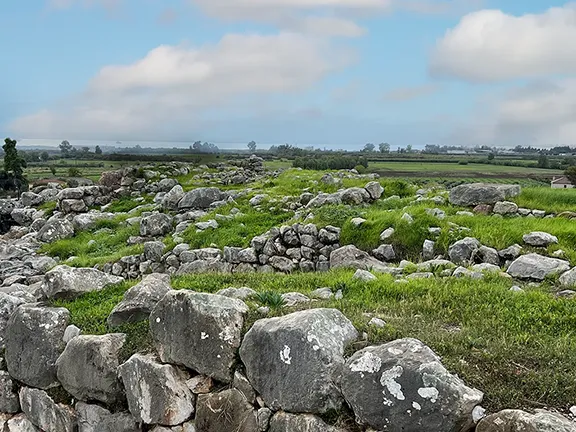
How and Why Rhodes Survived the Bronze Age Collapse - The site of ancient Ialysos (Trianda)
The site of ancient Ialysos (Trianda)

The Late Bronze Age Collapse: Resilience and Continuity on Mycenaean Rhodes

The collapse of Late Bronze Age (LBA) Mediterranean societies, occurring around 1200 BCE, is often presented as a general catastrophe that destroyed the Mycenaean palatial world and the empires of the Middle East generally (Cline, 2014; Knapp and Manning, 2016). Yet the archaeological record shows a more uneven process. While major mainland centres such as Mycenae, Tiryns and Pylos in Greece, and nearby Anatolian centres including Troy, Beycesultan and parts of the Arzawa complex, as well as southern coastal centres such as Tarsus, suffered destruction, abandonment or severe contraction, the island of Rhodes offers a different pattern, continuity, adaptation and gradual transformation rather than sudden erasure (Bachhuber, 2015; Deger-Jalkotzy, 2008).

The central question, therefore, is not whether Rhodes escaped the wider crisis altogether, but how far the island’s social and economic organisation may have enabled it to absorb those pressures more successfully than many palatial centres on the Greek mainland and in Western Anatolia. The available evidence points to a combination of decentralised social organisation, maritime flexibility, the prominence of Ialysos (modern day Trianda) as a gateway node, and Rhodes’s relative detachment from the land-based imperial systems that collapsed around it (Marketou, 1998; Eerbeek, 2017; Benzi, 2005).

Mycenaean Palatial Economy and Systemic Collapse

The primary Mycenaean centres of the Greek mainland, and the vassal states of the Hittite sphere in Anatolia, were organised around highly centralised redistributive economies. At their apex stood a central authority, typically the wanax, supported by bureaucratic administration, agricultural surplus extraction, elite consumption and monumental construction. Such systems could be efficient in periods of stability, but they were inherently vulnerable when trade routes, harvests or political authority came under pressure (Cline, 2014; Knapp and Manning, 2016).

When drought, social unrest, seismic disruption or maritime insecurity affected these systems, failure could cascade quickly, although the relative weight of each factor varied by region and remains debated (Cline, 2014; Knapp and Manning, 2016). The palace depended on surplus; the elite depended on the palace; and local populations depended, to differing degrees, on administrative structures that managed storage, redistribution and security. Once those structures failed, the wider political and economic order became vulnerable.

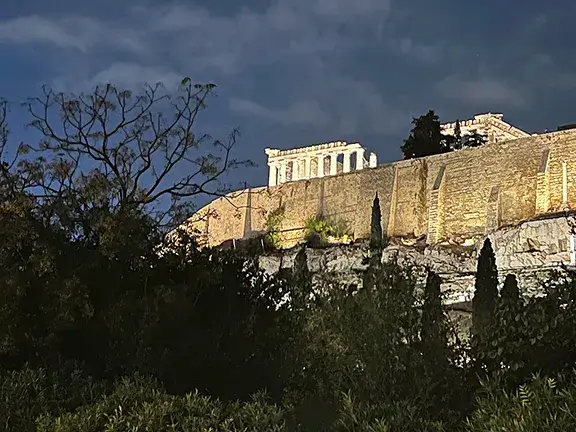
How and Why Rhodes Survived the Bronze Age Collapse - The site of ancient Lindos
The site of ancient Lindos

Socio-Political Structures of Bronze Age Rhodes

Rhodes occupied a peripheral but important position within the Mycenaean cultural sphere. The island was strongly Mycenaeanised in material culture, burial practice and elite display, but the evidence does not currently indicate the same palace-governed bureaucracy that characterised the Argolid, Messenia or parts of the Hittite-controlled territories of Western Anatolia (Mee, 1982; Eerbeek, 2017). This distinction matters because Rhodes seems to have adopted many of the symbols and exchange practices of the Mycenaean world without becoming dependent on its most fragile institutional features.

In this sense, Rhodes may have been connected enough to benefit from long-distance exchange, but sufficiently detached to avoid some of the most severe consequences of palatial collapse. Its social structure appears to have been more fluid and distributed than that of the mainland palaces, allowing local communities and elites some capacity to adjust when mainland systems broke down (Eerbeek, 2017; Deger-Jalkotzy, 2008).

Ialysos (Trianda): Maritime Trade and Gateway Dynamics

The strongest currently available archaeological evidence for Rhodian resilience comes from Ialysos, a settlement on the northern coast of the island. Unlike many mainland sites, where the transition from Late Helladic IIIB to Late Helladic IIIC is often marked by destruction horizons, contraction or abandonment, Ialysos shows signs of sustained occupation and continued development. Its stratigraphy, settlement scale and material culture suggest that it remained active through the crisis rather than being reduced to a destruction horizon or abandonment layer, though the precise nature of this continuity remains open to interpretation (Marketou, 1990; Marketou, 1998).

Ialysos was probably more than one settlement among several. On present evidence, it appears to have functioned as the island’s principal maritime gateway. Its location and assemblages point to involvement in exchange between the Aegean, Cyprus and the Levant. The concentration of imported ceramics and prestige goods at Ialysos suggests a level of connectivity and wealth accumulation not yet matched elsewhere on the island. This role may have helped Rhodes maintain access to exchange networks even as mainland palace systems deteriorated (Benzi, 2005; Vitale and Querci, 2024; Marketou, 1998).

Settlement Patterns: Lindos and Kamiros

The evidence from Lindos, on the eastern coast, and Kamiros to the west, adds nuance. It would be misleading to project the later Classical tripolis of Ialysos, Kamiros and Lindos back onto the Bronze Age, or to assume three equivalent state-level centres. Nevertheless, these sites indicate that Rhodian society was not confined to a single urban focus. Their funerary landscapes, especially chamber tombs and Mycenaean-style grave goods, suggest participation in the wider Mycenaean koine (Mee, 1982; Blinkenberg, 1931).

Kamiros is most clearly represented through nearby necropolises, including those around Kalavarda, where tombs dating to the LH IIIA and LH IIIB periods contained characteristic Mycenaean and Rhodo-Mycenaean pottery (Mee, 1982). Lindos is harder to interpret because later Archaic and Classical building programmes disturbed earlier layers, but Mycenaean occupation beneath the later sanctuary supports its Bronze Age significance (Blinkenberg, 1931). Together, these sites point to a distributed island network, with Ialysos apparently dominant but not isolated.

How and Why Rhodes Survived the Bronze Age Collapse - Archaeological site of Kamiros
Archaeological site of Kamiros

The 3.2 ka Event: Aridification and Economic Mitigation

Rhodes should not be treated as climatically exempt from the wider Eastern Mediterranean crisis. The so-called 3.2 ka event, a period of aridification beginning around 1200 BCE, appears to have affected much of the broader region (Kaniewski et al., 2019). If neighbouring areas experienced reduced precipitation, crop stress and food insecurity, Rhodes was likely exposed to similar pressures, even if island-specific palaeoclimatic data remains limited. Its survival therefore cannot be explained simply by an absence of environmental stress (Cline, 2014; Knapp and Manning, 2016).

The difference may have lain in the island’s capacity to mitigate such stress. Rhodes seems to have been less dependent on a land-based taxation system designed to feed a large non-producing palace elite. Its maritime orientation may have provided greater flexibility. Communities could diversify resources, maintain exchange contacts, and perhaps import food or goods when local production faltered. Decentralised settlements were also less likely to suffer total systemic failure, because there was no clear evidence for a single palace apparatus whose collapse would have brought down the entire island (Eerbeek, 2017; Deger-Jalkotzy, 2008; Knapp and Manning, 2016).

Geopolitical Buffers: Rhodes and the Western Anatolian Frontier

Rhodes also needs to be understood in relation to Western Anatolia. Coastal centres such as Miletus, known in Hittite sources as Millawanda, were deeply entangled in the rivalry between the Hittite Empire and the Mycenaean world. As the Hittite imperial system fragmented, such frontier zones appear to have been exposed to political violence, shifting alliances and destruction (Bachhuber, 2015; Cline, 2014).

Rhodes, separated from the Anatolian mainland by a maritime channel, occupied a different geopolitical position. It does not appear to have been a territorial vassal state or a contested land frontier in the same sense as some Anatolian coastal centres. Its value seems to have lain in connectivity rather than territorial control. This may have reduced its exposure to the kinds of imperial dependency and strategic targeting that affected land-based and coastal Anatolian centres (Bachhuber, 2015; Benzi, 2005).

Interpretive Frameworks: Mycenaean Colonialism vs. Indigenous Agency

The interpretation of Mycenaean Rhodes has often moved between two models. An older colonialist view treated the island as a Mycenaean colony established for strategic maritime control. A more recent social-construction approach argues that local Rhodian communities may have adopted Mycenaean material culture, styles and status symbols to express authority within their own maritime society (Eerbeek, 2017).

This distinction helps explain Rhodes’s resilience, although it should not be treated as a complete explanation on its own. If Mycenaean culture on Rhodes was locally adapted rather than imposed by a fragile mainland bureaucracy, then the collapse of mainland palaces would not necessarily have destroyed Rhodian society. Instead, Rhodian elites may have been able to preserve useful cultural forms while reorganising exchange and authority around local needs (Eerbeek, 2017; Mee, 1982).

Late Bronze Age to Iron Age Transition: A Rhodian Reconfiguration

Rhodes appears to have survived the Late Bronze Age collapse not because it stood outside the crisis, but because it was structured differently from many of the systems that failed most dramatically. It was Mycenaeanised but not demonstrably fully palatial; connected but not clearly territorially dependent; decentralised, yet apparently anchored by the powerful maritime node of Ialysos. Taken together, these features likely made the island more resilient to drought, trade disruption and geopolitical fragmentation (Marketou, 1998; Eerbeek, 2017; Deger-Jalkotzy, 2008).

In the south-eastern Aegean, then, the LBA collapse may be better understood less as annihilation than as reconfiguration. Rhodes suggests that the end of the Bronze Age was not a uniform event but a set of uneven regional transformations. Its history offers a counter-narrative to the mainland model, where palace systems broke. A maritime and locally adaptive society could, under certain conditions, endure (Knapp and Manning, 2016; Marketou, 1990; Marketou, 1998).

Authors Note

To read about the island of Rhodes leading up to the collapse of the Bronze Age: Rhodes and the Evolution of the Eastern Trade Networks, c. 1700 BC - 1200 BC

To read about the Iron Age Development of the island of Rhodes: Rhodes in the Iron Age: Resilience and Mediterranean Maritime Exchange

References and Further Reading

  • Bachhuber, C. (2015). Citadels of the Bronze Age: The Architectural and Social Evolution of the Aegean and Anatolian Settlements. Cambridge: Cambridge University Press.
  • Benzi, M. (2005). 'The Mycenaean Pottery from the Dodecanese'. In: Laffineur, R. and Greco, E. (eds.), Emporia: Aegeans in the Eastern and Central Mediterranean. Aegaeum 25. Liège: Université de Liège, pp. 213–220.
  • Blinkenberg, C. (1931). Lindos: Fouilles et recherches, 1902–1914. Berlin: Walter de Gruyter.
  • Cline, E. H. (2014). 1177 B.C.: The Year Civilization Collapsed. Princeton: Princeton University Press.
  • Deger-Jalkotzy, S. (2008). 'The Aegean Islands and the Breakdown of the Mycenaean Palatial Economy'. In: Shelmerdine, C. W. (ed.), The Cambridge Companion to the Aegean Bronze Age. Cambridge: Cambridge University Press, pp. 276–292.
  • Eerbeek, J. (2017). The 'Mycenaeans' in the south-eastern Aegean revisited. PhD Thesis. University of Amsterdam. Available at: The 'Mycenaeans' in the south-eastern Aegean revisited
  • Kaniewski, D., Marriner, N., Bretschneider, J., Jans, G., Morhange, C., Cheddadi, R., and Van Campo, E. (2019). '300-Year drought frames Late Bronze Age to Early Iron Age transition in the Near East: new palaeoecological data from Cyprus and Syria', Regional Environmental Change, 19(8), pp. 2287–2297.
  • Knapp, A. B. and Manning, S. W. (2016). 'Crisis in Context: The End of the Late Bronze Age in the Eastern Mediterranean', American Journal of Archaeology, 120(1), pp. 99–149.
  • Marketou, T. (1990). 'The Late Bronze Age in the Dodecanese: Evidence for the Development of the Prehistoric Aegean', Annual of the British School at Athens, 85, pp. 227–245.
  • Marketou, T. (1998). 'Excavations at Trianda (Ialysos) on Rhodes: New Evidence for the Late Bronze Age I Period', Aegean Archaeology, 3, pp. 9–23.
  • Mee, C. (1982). Rhodes in the Bronze Age: An Archaeological Survey. Warminster: Aris & Phillips.
  • Vitale, S. and Querci, A. (2024). 'Ships, Routes, and Connectivity: Seafaring Technology and the Making of the Early Late Bronze Age Aegean', Thiasos: Rivista di archeologia e architettura antica, 13, pp. 435–446.

Location Map

Legacy Reloaded: A dev, an AI, and the relentless pursuit of 100

Enjoying this clean, uncluttered read?

You are currently browsing the result of a massive technical overhaul. My new book, Legacy Reloaded: A dev, an AI, and the relentless pursuit of 100, chronicles the journey of transforming an aging legacy website into a modern, lightning-fast platform that hits the perfect 90+, 100, 100, 100, 3/3 Lighthouse metrics. It’s a story of collaboration between developer and AI, and the stubborn pursuit of technical perfection.

Read the Story

You have finished reading chapter 2

More articles in the Survivors of the Bronze Age Collapse series: